Cotswolds Regenerative Agriculture Conference 2027
The Regenerative Agriculture Accelerator Programme (RAAP) is an innovative initiative for farmers and advisors who want to deepen their understanding of regenerative and agroecological principles – and learn how to apply them in practice to produce nutritious food, improve soil health, boost biodiversity, and build farm resilience.
RAAP runs on an annual cycle. Successful applicants join a small group that meets regularly for farm tours, workshops, and other events. Each group brings together participants from different farming systems, stages of transition, and backgrounds –ensuring a diversity of experience, challenge, and support. This becomes their ‘community of practice’, offering peer-to-peer learning alongside exposure to a wide range of practitioners and specialists – often chosen by the group to meet shared needs and interests.
The programme’s core goal is to accelerate the transition to impactful, profitable regenerative farming in the Cotswolds by building a confident, connected, and knowledgeable community of farmers and advisors who learn from each other and from leading practitioners.
BLOG: Landscape Design Workshop hosted by Claire Whittle
‘It’s a bit like a night out in Liverpool’ – an intriguing description of cow dung. But perhaps that’s just because I’ve never been out in Liverpool…
To qualify her comment, Claire did say that dung ‘had far more goodness than badness’ – so perhaps it wasn’t quite as insulting as first impressions might suggest. 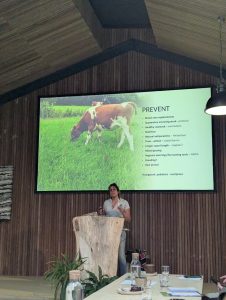
The huge diversity, activity and wealth of life found in cow dung are often overlooked. But for vet Claire Whittle, this overlooked world sparked a passion for holistic farm design. Opening her workshop by focusing on dung, she delved into its depths, explaining how a single cow pat can support roughly one thousand insects, with one cow supporting up to two million insects over the course of a year.
This led neatly to the champions of dung: the mighty dung beetle, capable of pushing soil weighing 500 times its own body weight. These ecosystem engineers recycle nutrients, aid water infiltration, sequester carbon and reduce parasite and fly burdens, among many other benefits. They are integral to healthy soils and a functioning farm system.
For Claire, it took reading a book to realise that what she had considered standard veterinary practice for years – prescribing anthelmintics – could be highly detrimental to dung beetles. She had simply never been told this before. With roughly half of the UK’s 60 dung beetle species nationally scarce or threatened, this realisation prompted a whole new approach. She began looking beyond the day-to-day and towards the wider system. Having previously viewed nature and farming as two distinct, separate things, she radically changed her perspective, set up Dung Beetles for Farmers and discovered the world of regenerative agriculture.
Farms are ecosystems in their own right, and Claire encourages farmers to treat them as such, drawing on the connections between different aspects of a farm: wind direction and flies, shelter belts and livestock breeds, poaching and disease. Her aim is to encourage farmers to approach problems holistically. Worms or flies might be affecting a farm system, but she urged everyone to ask why – and then keep asking why until they reach the root cause. Address that cause and, ultimately, she argued, you can save time and money while reducing ill health.
Claire takes a practical approach to problems, recognising that many treatments are necessary. It’s not about elimination, but minimisation. She encouraged the room to use the PAT approach – prevent, assess, treat – with a particular focus on preventing disease in the first place. What measures could protect your livestock from disease? What swards and trees could be planted to provide better nutrition? What habitats could be created across the farm to offer shelter? And what conditions are needed for optimum performance?
The key, she argues, is diversity: diversity of sward, trees and hedges. Allow your livestock to eat the rainbow, too. This approach was once well understood, as reflected in the Welsh field names found around her; ‘Cae Ysbyty’, which translates literally as ‘hospital field’. These were once some of the most diverse pastures, where sick or injured farm animals were allowed to graze and self-medicate.
Claire explained that the nutritional benefits of a variety of so-called ‘weeds’ can equal, or sometimes exceed, those of ryegrass. She also argued that diverse, longer swards – particularly those with a more varied structure – can help prevent worms from reaching livestock, unlike short ryegrass swards. Longer swards, hedges and trees also provide shelter, something critically needed this summer. Heat stress has been shown to reduce fertility and productivity, with effects not only on the current generation of livestock but potentially extending to three generations. The importance of shelter and temperature regulation has never been more critical.
Landscape design is fundamental to livestock welfare. Claire helps farmers design systems that reduce inputs, maximise profits, and build resilience into both their farms and their response to climate change. Her consultancy practice is built around selling her invaluable time and expertise, so that ultimately, she doesn’t need to sell you the medicines.
Applications for year four of RAAP will open in the coming months. Any Cotswold farmer or land adviser is invited to apply for access to heavily discounted rates to attend inspiring talks such as this one – talks that give you the space to think about your farm system holistically, and to ask (and answer) probing questions.
If your farm is an ecosystem, is it an intact one?
Thank you to FarmEd for hosting the workshop, and to Claire Whittle for sharing her wealth of knowledge.
BLOG: Regen at Scale: Overbury Farm hosted by Jake Freestone
It was a lightbulb moment for Jake Freestone…
While in Oklahoma during his Nuffield Scholarship, he was directly confronted with the effects of a heavy rainstorm on two fields, separated by a single road and a 20-year history of different farming practices – one regenerative and the other conventional. After the rainstorm, the conventionally farmed field was devastated, barely able to support a single crop, whereas the regeneratively farmed field had withstood it. 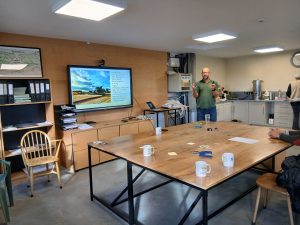
This direct comparison of how soil management affected climate and crop resilience was the catalyst that set Jake on a steady path towards regenerative agriculture. It was an approach he took back home to Overbury Farm, where he worked hard to turn the farming system around. Having started their new approach in 2013, by 2015 Overbury Farm was almost entirely no-till. In 2026, it is now an excellent example of regenerative agriculture working at scale.
Jake hosted a visit for all three cohorts of RAAP members. Over the course of three hours, he showed them not only the fields, but also gave them a glimpse of the spreadsheets behind the business. Overbury Farm owns 1,600 hectares and has 2,000 hectares under a CFA agreement. It is an exemplar farm, participating in Higher Tier, an SFI agreement, the LEAF Demonstration Farm network and the Agri-Tech Centre Farm initiative. Predominantly arable, it relies on cover crops, direct drilling, a diverse cropping pattern and its own composting system. It also has a flock of 1,050 outdoor-lambing ewes. Jake sees cover crops as the cornerstone of a healthy farming system, calculating that they put £539/ha of nitrogen back into the soil, while also building fertility into the Cotswold brash.
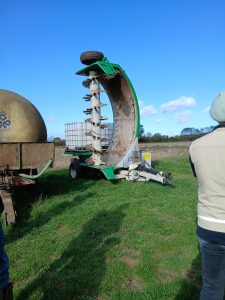
At Overbury Farm, the regenerative focus embraces technology. With the help of ADOPT funding, the farm has developed a significant on-farm composting system, supported by a compost turner that was part-funded through FiPL. The compost, matured over a year, is applied to the fields to improve soil health and water infiltration, sequester carbon, reduce GHG emissions, and reduce the need for artificial fertilisers.
There is an openness to learning and experimentation built into the culture at Overbury. Among the many different crops and vegetables, they grow as part of their standard rotation, they have recently trialed hemp and are establishing agroforestry across some of the higher fields on the farm. As neatly summarized, when it comes to trial and error, ‘you only know the right answer later’. Jake’s commitment to learning and improving is clearly demonstrated by the many successful enterprises now established across the farm business.
All farming practices are precisely monitored, and every decision is backed up by a wealth of data. This has allowed the team to calculate the nature and carbon uplift being created on the farm. Jake is working on developing income streams from this natural capital uplift through the Green Farm Collective, a group of like-minded farmers seeking investment to create a community focused on nurturing soil and nature.
Thank you to Overbury Farm and Jake Freestone for hosting the RAAP visit.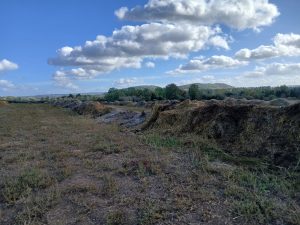
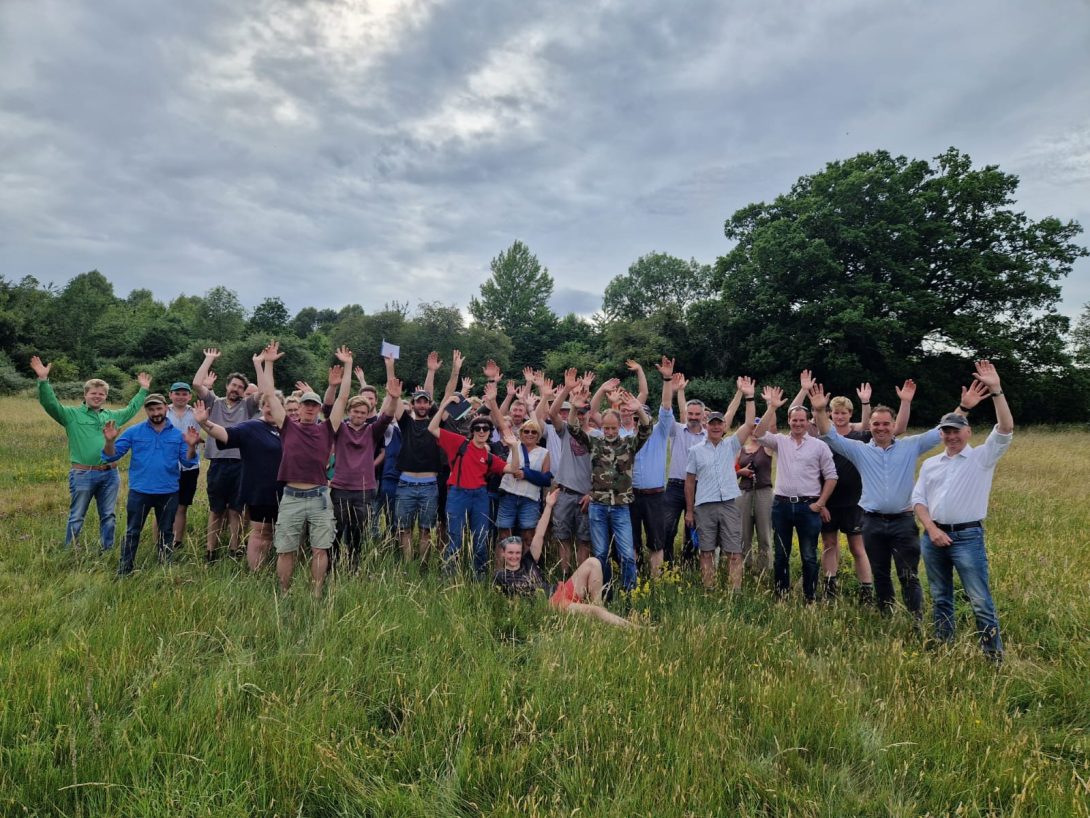
Programme highlights (2024-25)
- Farm tours, including RAAP members’ own farms
- Sessions with Gabe Brown and Allen Williams (Understanding Ag, USA)
- Participation in the Regenerate Outcomes Soil Academy at FarmED
- Study tour to Groundswell Regenerative Agriculture Festival
- Workshops on soil health, weatherproof farming, and microscopy
- Training in facilitation, team building, and project management
- Media and communications training
- Agronomy clinics
- Co-design and delivery of the first Cotswolds Regenerative Agriculture Conference
Now in its second year, RAAP is running two groups and continuing to evolve. We hope to keep it going beyond March 2026, subject to funding.
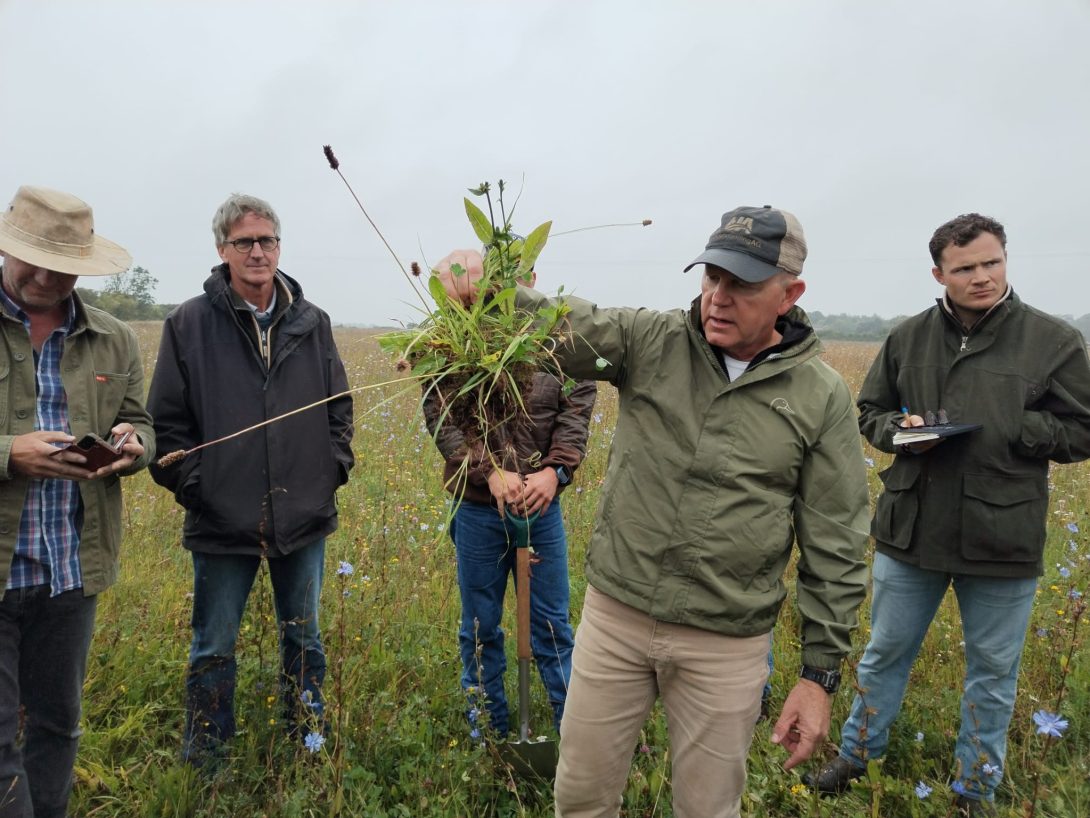
Why this programme?
Transitioning to regenerative farming is a complex journey. It takes motivation, knowledge, and confidence. The learning curve is steep, the evidence base is still emerging, and definitions can be hard to pin down. Many pioneers feel isolated.
While a few farmers are leading the way, many in the Cotswolds are just getting started. Contractors also play a crucial role in the shift – as does the wider network of regenerative advisors, agronomists, vets, ecologists, conservationists, and others.
Across this network, people are asking similar questions:
- How can we deepen and speed up the transition?
- How do we support those just starting out—or feeling isolated?
- How can we share knowledge and spread good practice?
- How do we inspire and enable others to follow?
- How can we make the most of ELMS and extend the ripple from FiPL funding?
- Can we connect better with UK leaders and global pioneers?
RAAP is one response: a high-impact, farmer-led programme, designed by and for regenerative farmers and advisors in the Cotswolds.
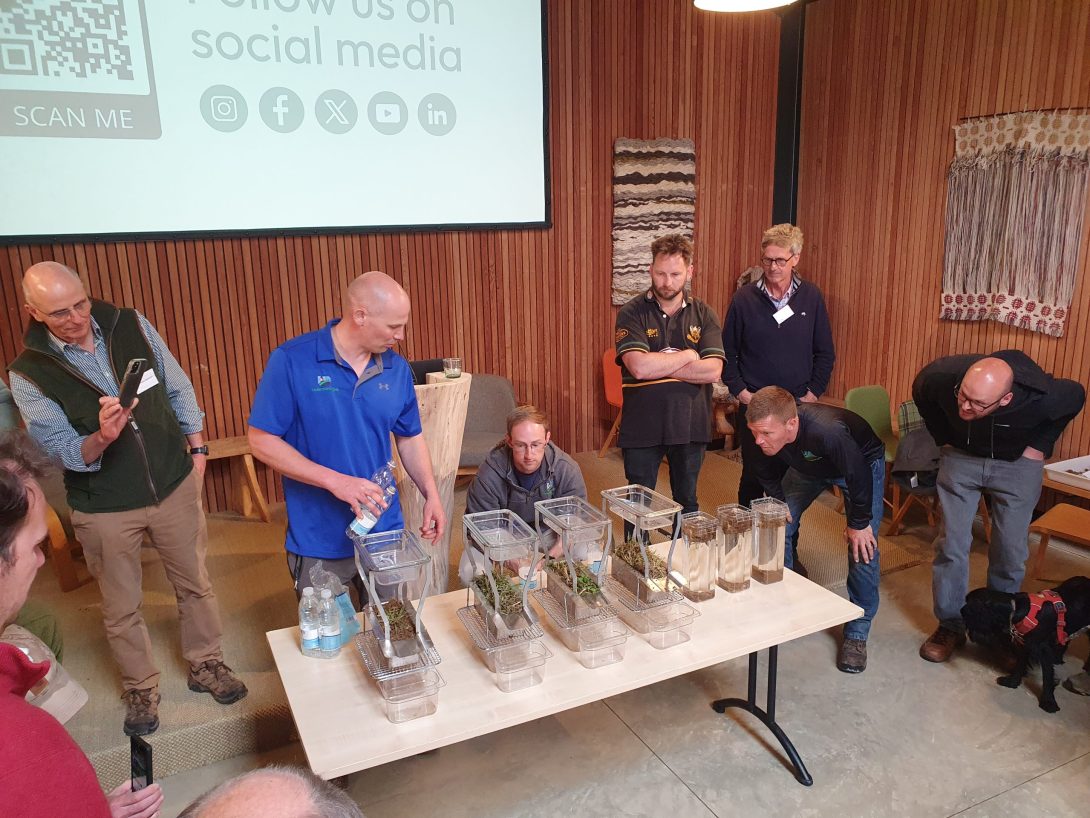
Programme management
RAAP is hosted by the Cotswolds National Landscape (CNL) team and funded through the Farming in Protected Landscapes (FiPL) programme.
It is facilitated by Jonty Brunyee – Cotswolds farmer, agroecological mentor and advisor – with support from a network of independent advisors and specialists.
For more information:
Contact jonathan@conygreefarm.co.uk / 07886 305508